All four of these streams are easily crossed in September, but some of them can be dangerous in the spring or after a heavy rain. The reason they do not have bridges is because when they flood, it is enough to destroy a bridge.
If there is snow in the watershed then the stream level should be lower in the morning when the temperature is lower. Rain will cause water levels to rise, sometimes rapidly.
Tips on crossing
If you are alone and encounter a stream crossing that gives you pause, I recommend waiting until another hiker comes so you can cross together.
Before crossing, look downstream for obstacles and opportunities in case you are swept down-stream. Trekking poles add stability (keep the straps on your wrists). When crossing a stream, unbuckle the waist strap and use only one shoulder strap (the down-stream side). In strong current face up-stream and walk sideways, leaning hard upstream. If you fall, try to fall upstream onto your hands, not your back. If you are crossing on a log, falling off the upstream side of that log could pin you under that log or against it. Better to fall on the downstream side of the log.
Kennedy Creek
West of Glacier Peak in Section K
PCTA mile marker 2515.5
Lat long: 48.12471, -121.17078
Adams Creek
West side of Mt Adams in Section H
PCTA mile marker 2245.4
Lat long: 46.24298, -121.54331
No-Name Creek
East of Pea Soup Lake, midway between Snoqualmie Pass and Stevens Pass in Section J
PCTA mile marker 2444.35
Lat long: 47.57720, -121.14405
Lemah Creek
West of Pete Lake in the southern half of Section J
PCTA mile marker 2417
Lat long: 47.47686, -121.26166
Alternate Routes
Lemah Creek
Lemah Creek once had a sturdy 50' bridge. It was washed completely away in 2009. You will still see the large footings on either side of the creek.
In the spring when the water is high and fast, I prefer the lower Lemah Creek alternate route over the regular route. The alternate route is only 0.07 miles longer than the regular route and it actually saves you a small amount of elevation gain in either direction. The creek is much wider at the alternate crossing point, thus is less deep.
2026: This spring there is a log partially across the creek at the site of the old bridge. And there was a photo of a very large log across the creek near the lower crossing, but the exact location of that log was not included.
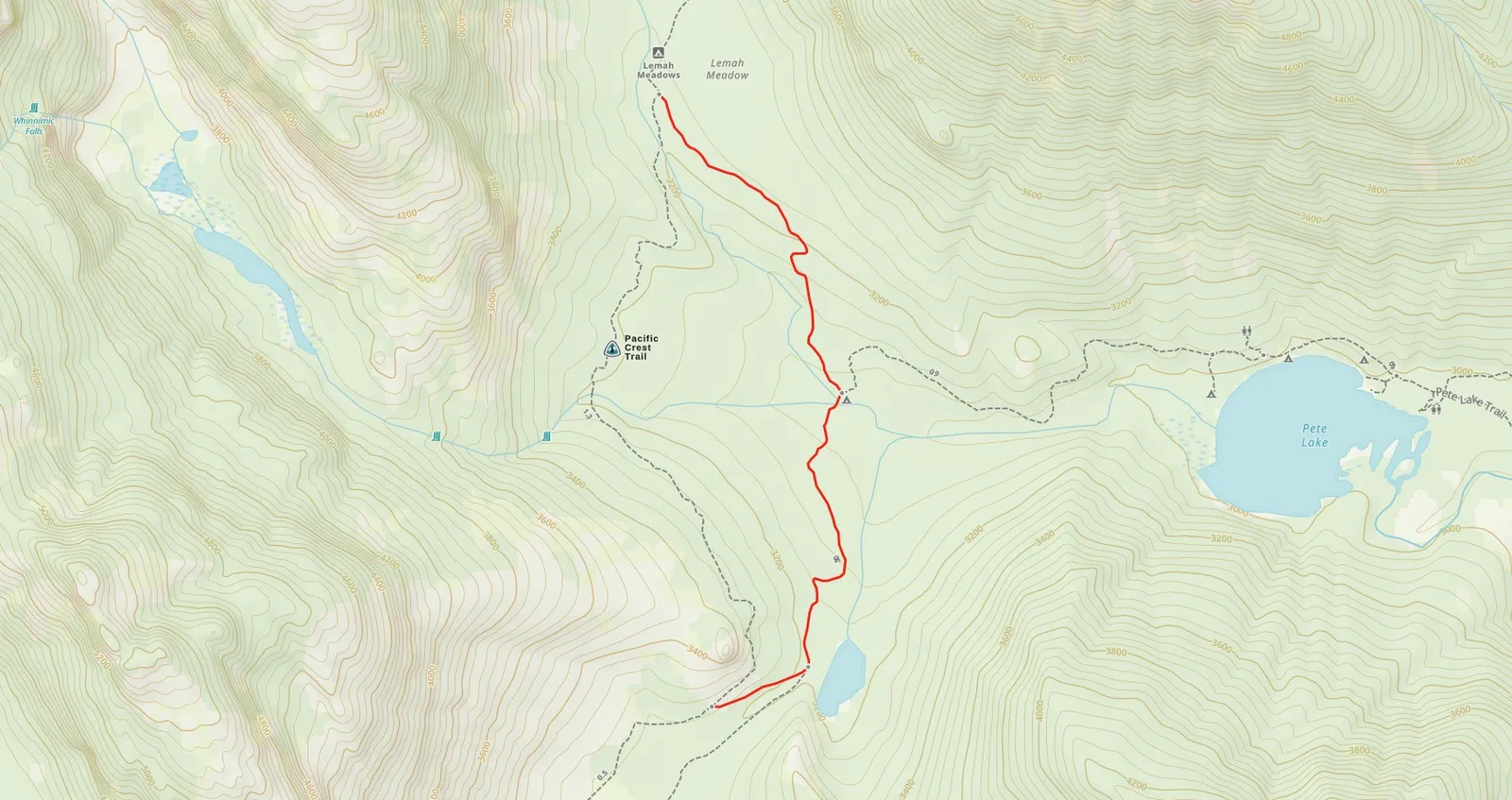
Lemah Creek is a potentially dangerous creek because it has a large watershed above it with deep snow deposits on Lemah Mountain. Heavy rains can cause this creek to rise rapidly.
No-Name Creek
If you believe No-Name creek to be impassible you can avoid it by taking the Cathedral Pass Trail and Deception Pass Trail around the opposite side of Hyas Lake. This is a 8.67 mile detour which is 3.79 miles further than the normal route. It adds 374 ft more elevation gain going northbound and 369 feet more going southbound
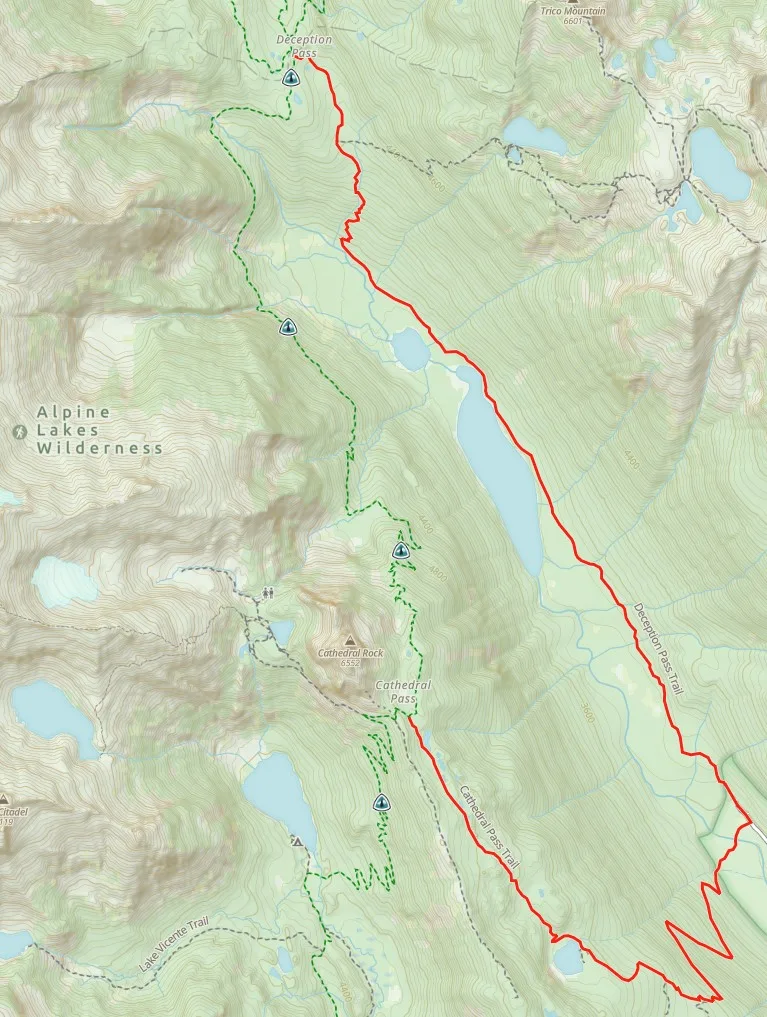
While No-Name's source is not Pea Soup Lake, it is a potentially dangerous stream because it has a large watershed above it with deep snow deposits, and because the north side of the stream is constrained by a sheer rock wall.
Adams Creek
If you believe Adams Creek to be impassible you can avoid it by taking the Divide Camp Trail and Killen Creek Trail. This 8.4 mile route is 7.08 miles longer than the PCT route. It adds 1,506 ft of elevation gain going northbound, and 1,539 ft of elevation going southbound
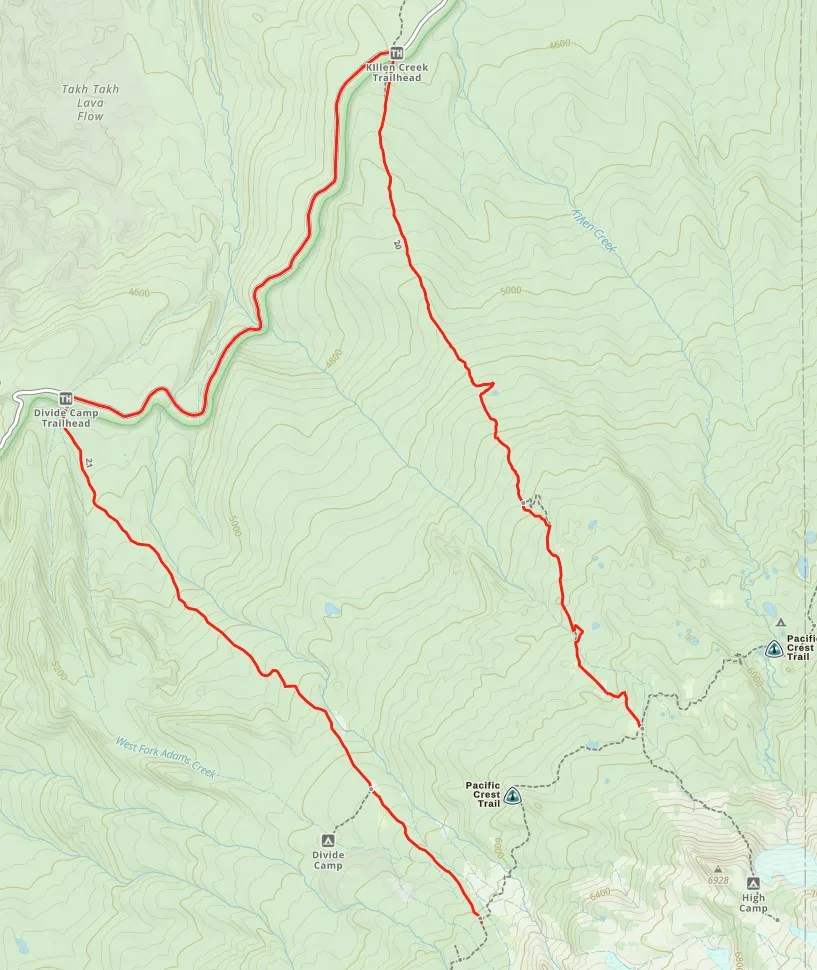
Adams Creek is a high flow creek because it is fed year-round by the Adams Glacier and large watershed. It is a braided creek with two or more paths to cross.
Kennedy Creek
No alternate route.
It's unfortunate that this notorious creek crossing has no viable alternate route. The old alternate route along White Chuck River Trail and Kennedy Ridge Trail were destroyed by flooding and mudslides in 2003. This 2.85 mile route was 1.12 miles longer than the regular route. It added 246 ft of elevation gain going northbound, and 249 ft of elevation going southbound
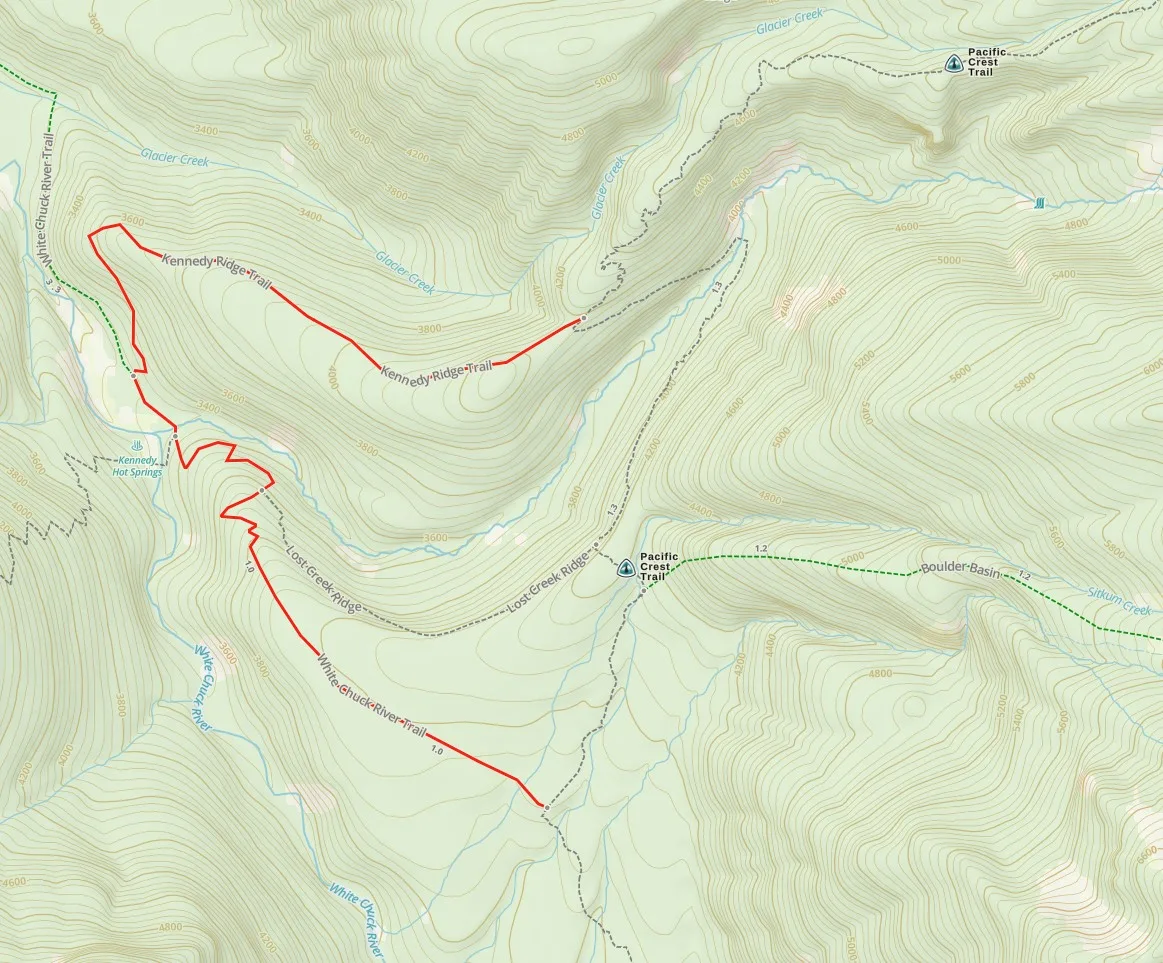
Kennedy Creek is a high flow creek because it is fed year-round by a glacier and large watershed.